I’ve worked across all aspects of digital product development, from content design to UX strategy to product management. Whatever the role, you can count on me to bring these skills to your team.
Rapid ideation and prototyping
Previous company initiatives had established a structured content model that would require our internal content creators to substantially change the way they worked. Meanwhile, our newly hired Advanced Analytics team was building an AI model based on our company’s content.
I saw an opportunity to combine these initiatives with a user-centered approach that ensured we addressed real challenges faced by the content team.
Approach
- Organized one-week sprint to reframe an ambiguous business problem, develop a concept solution, and test it with users.
- Leveraged the prototype’s success to secure investment in further product development.
- Defined a comprehensive product strategy, including a vision statement, guiding principles, and workflows, and crafted a roadmap for initial releases.
- Directed the design and development team in creating a beta version of the tool.
Outcome
The beta version of the tool was successfully launched and piloted by two content creation teams. Following this achievement, I was promoted and transitioned the project’s future launches to a new product manager.
Reflection
This product would not have been possible without two key factors:
- My years of building relationships within the organization enabled me to quickly assemble a diverse team for a week-long discovery sprint.
- The data from testing the early prototype provided compelling evidence that convinced executives to approve further development.
However, this executive enthusiasm also had a drawback: It led to a hasty transition into full-scale development. In retrospect, I wish we had conducted a more comprehensive build vs. buy analysis to explore whether the product’s benefits could have been achieved more cost-effectively with third-party components.
Systems thinking
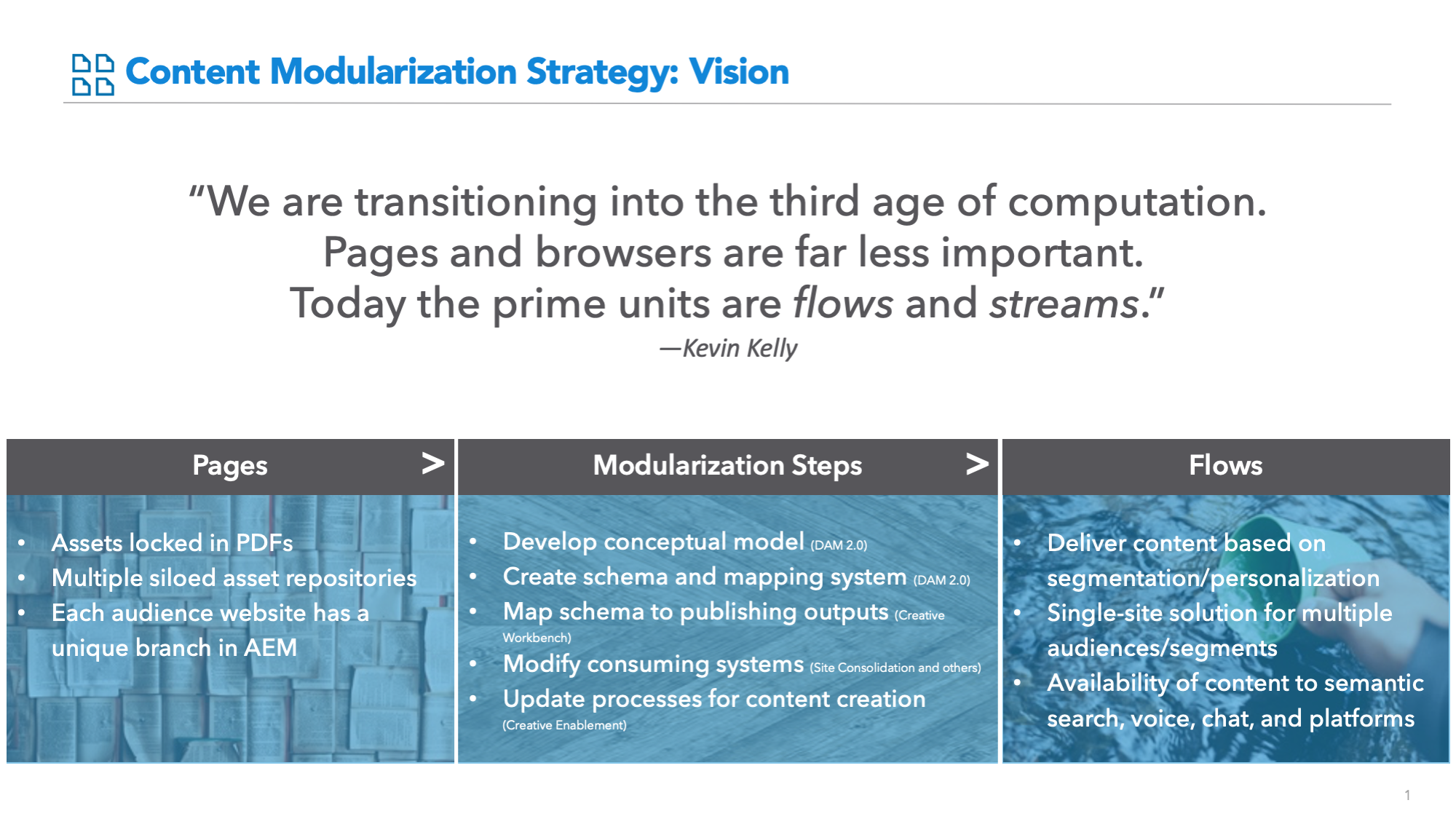
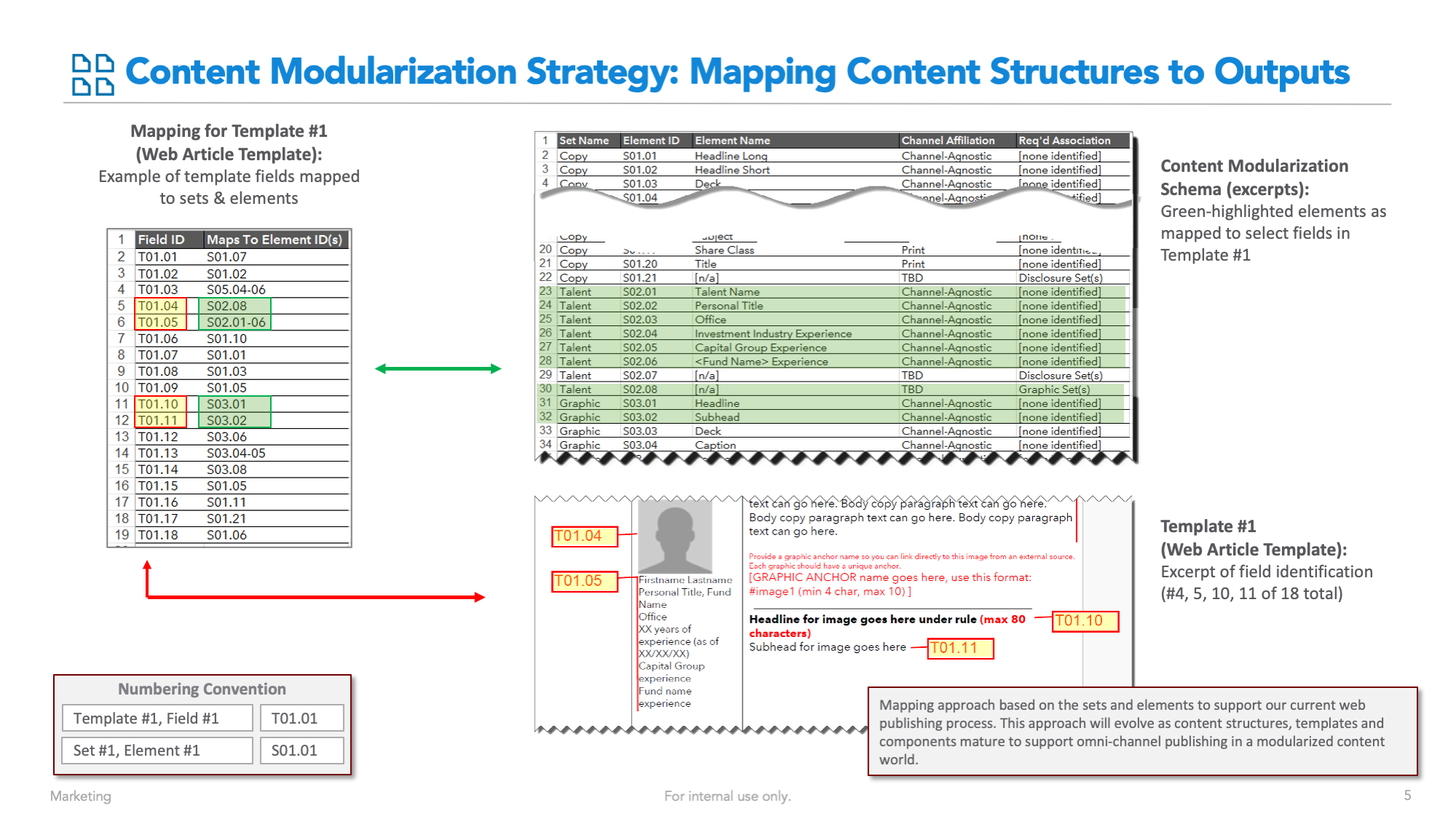
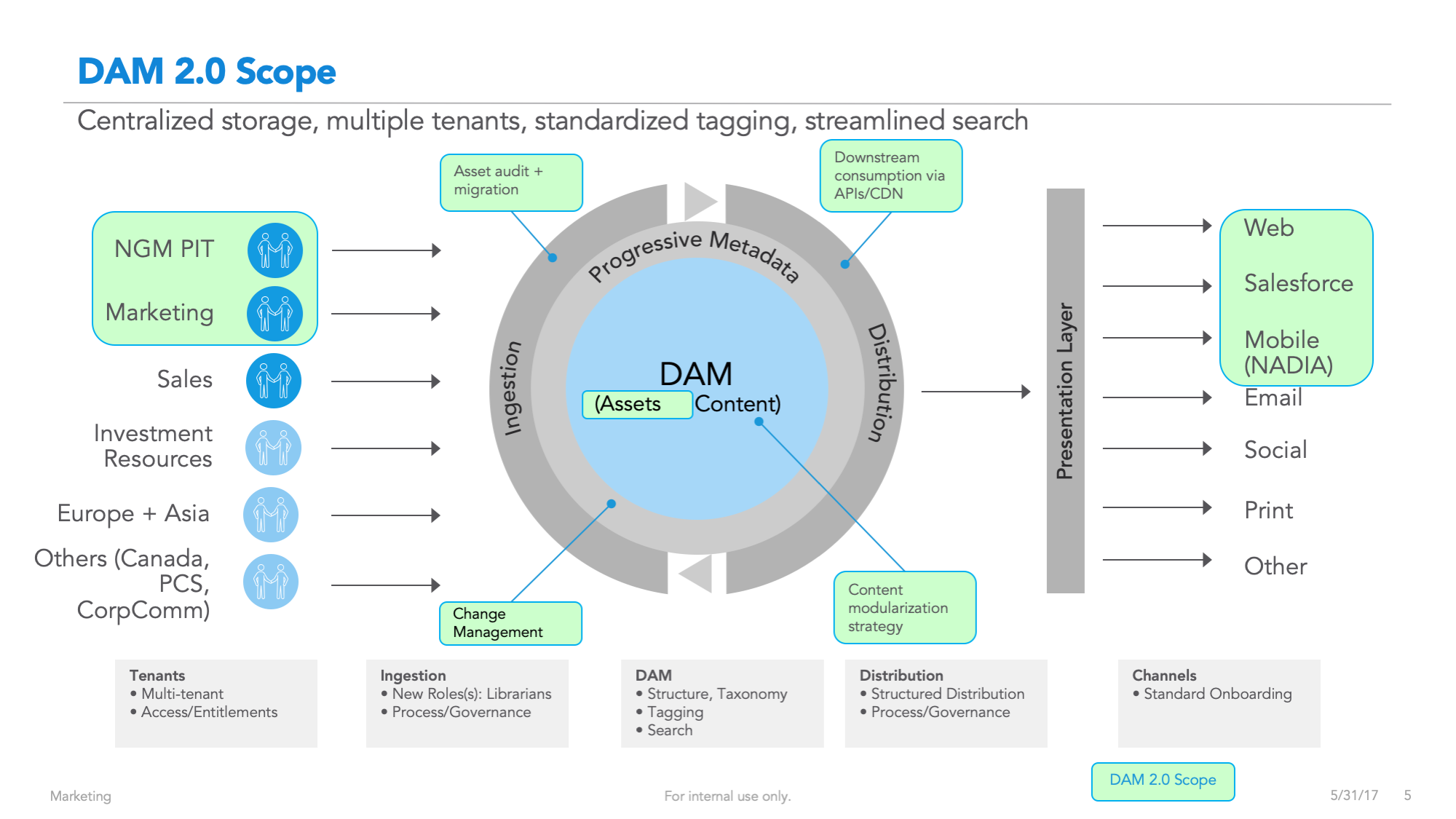
When I arrived at Capital Group, the company created content in a bespoke manner, approaching each deliverable as a blank slate. In addition, a pervasive print-first mindset resulted in most of the company’s content IP being locked up in PDFs, difficult to find and reuse.
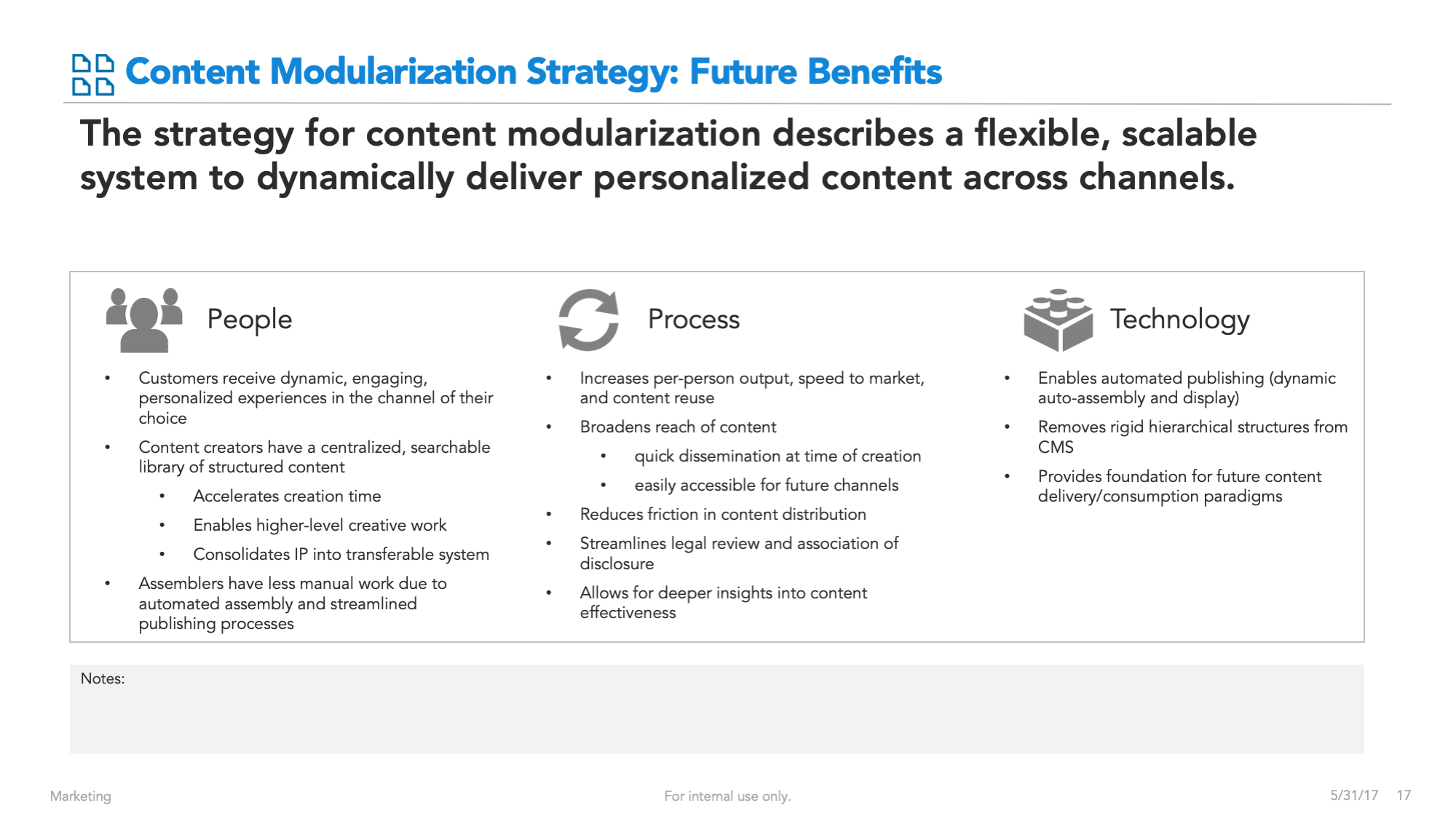
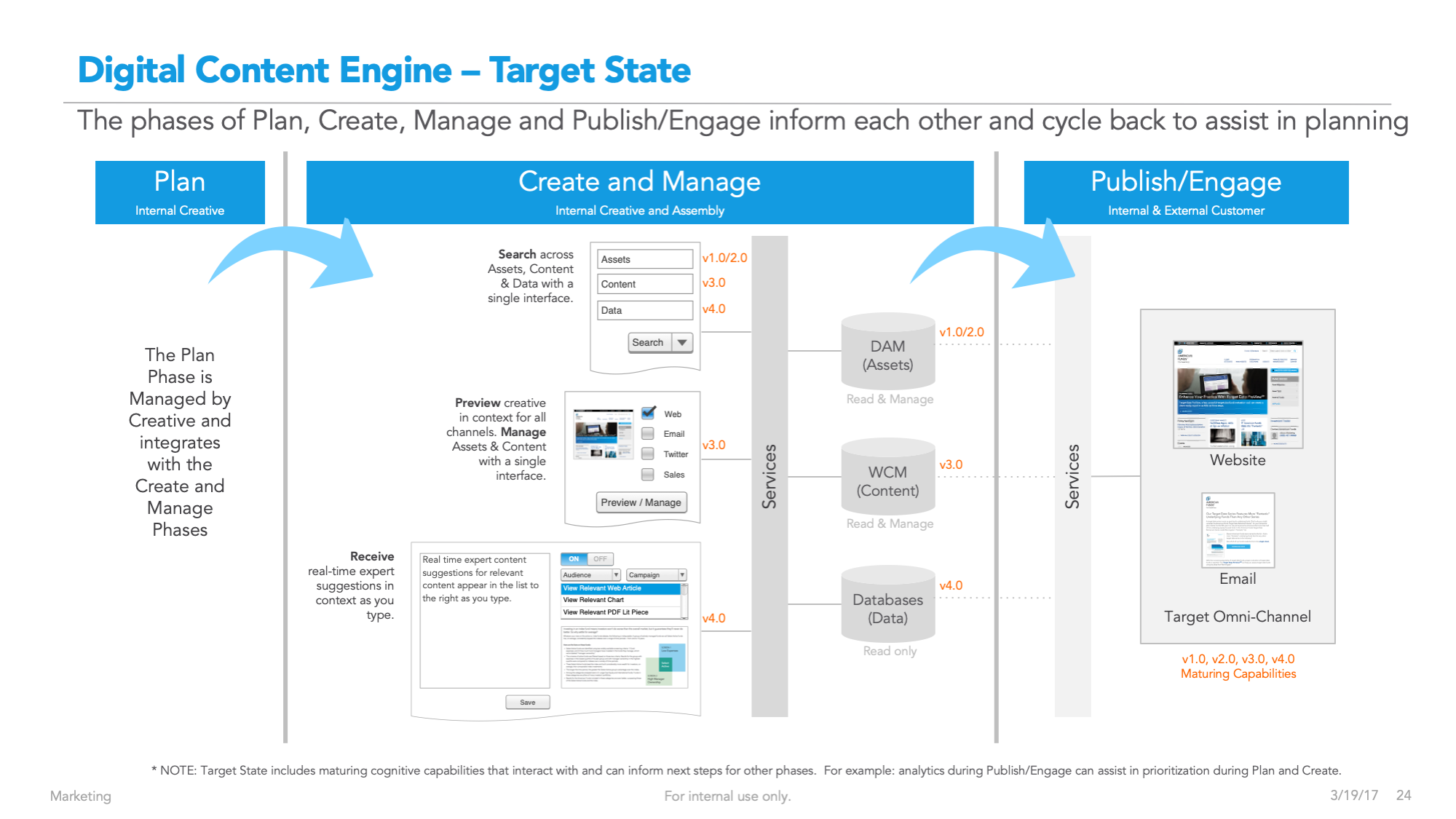
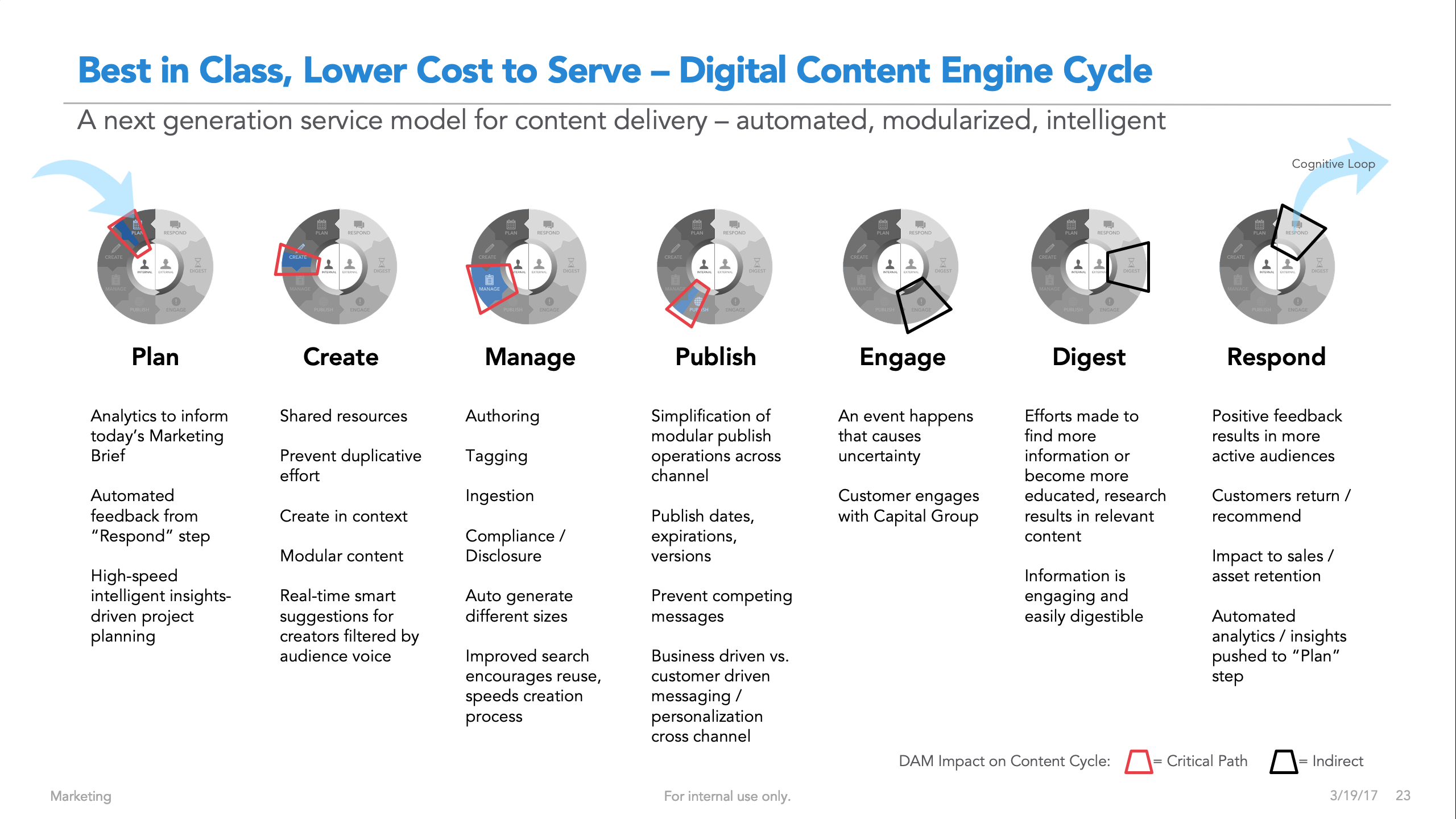
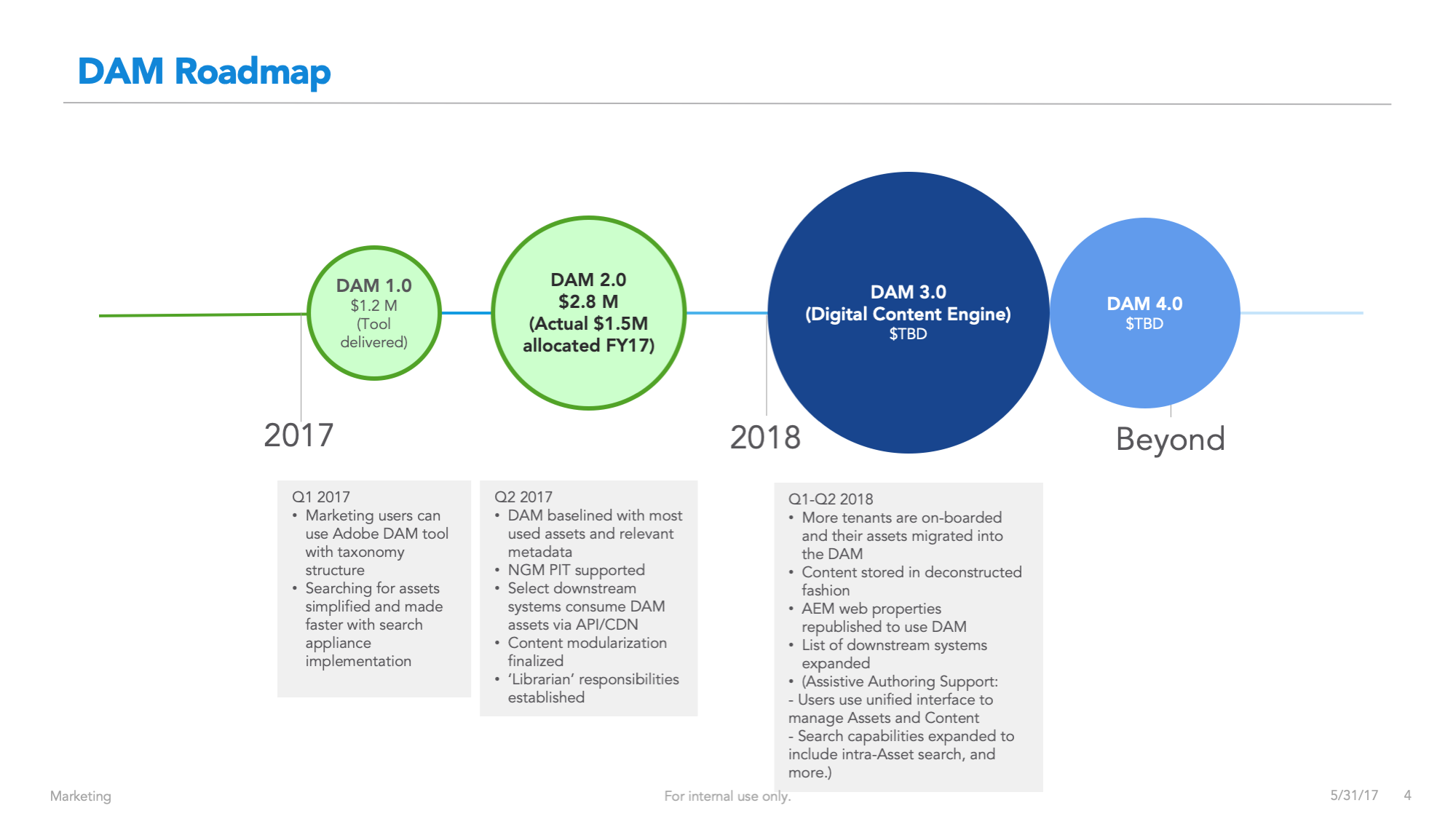
I led a team of content strategists, content creators, and technologists on a multiyear initiative to maximize IP value and support the growing demand for multi-channel digital experiences by standardizing content structures, streamlining approval processes, and building systems to manage content and assets.
Approach
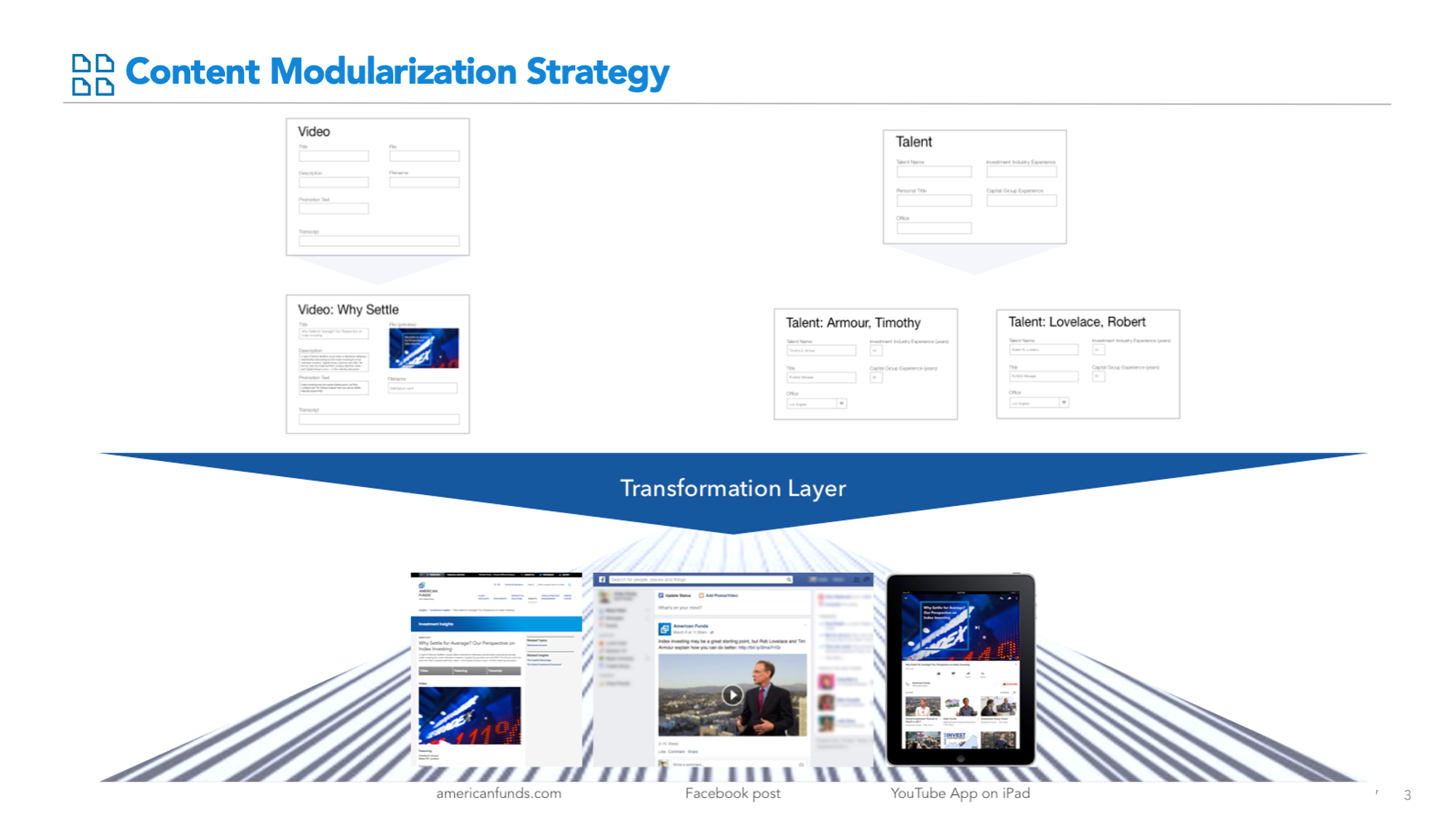
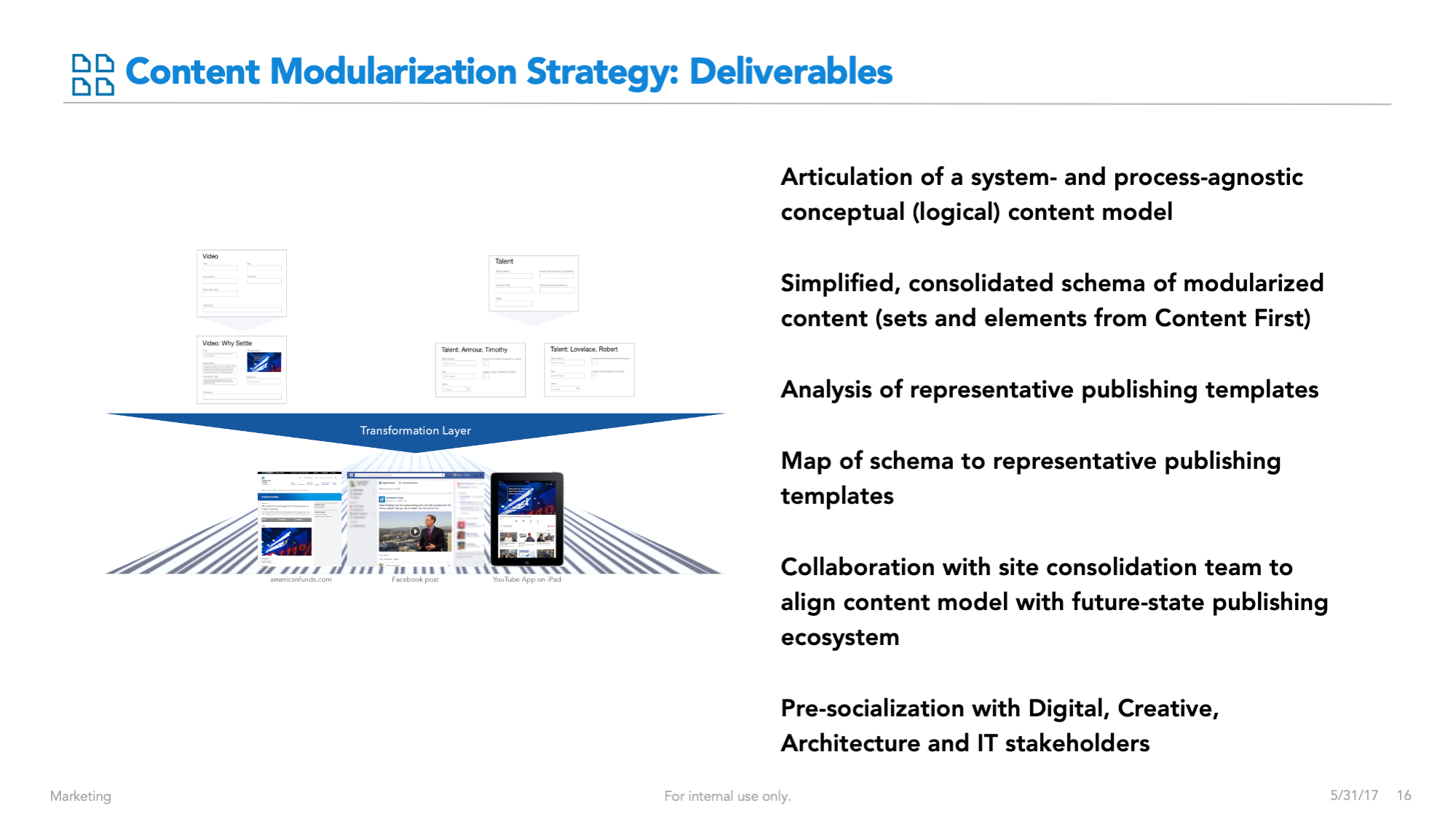
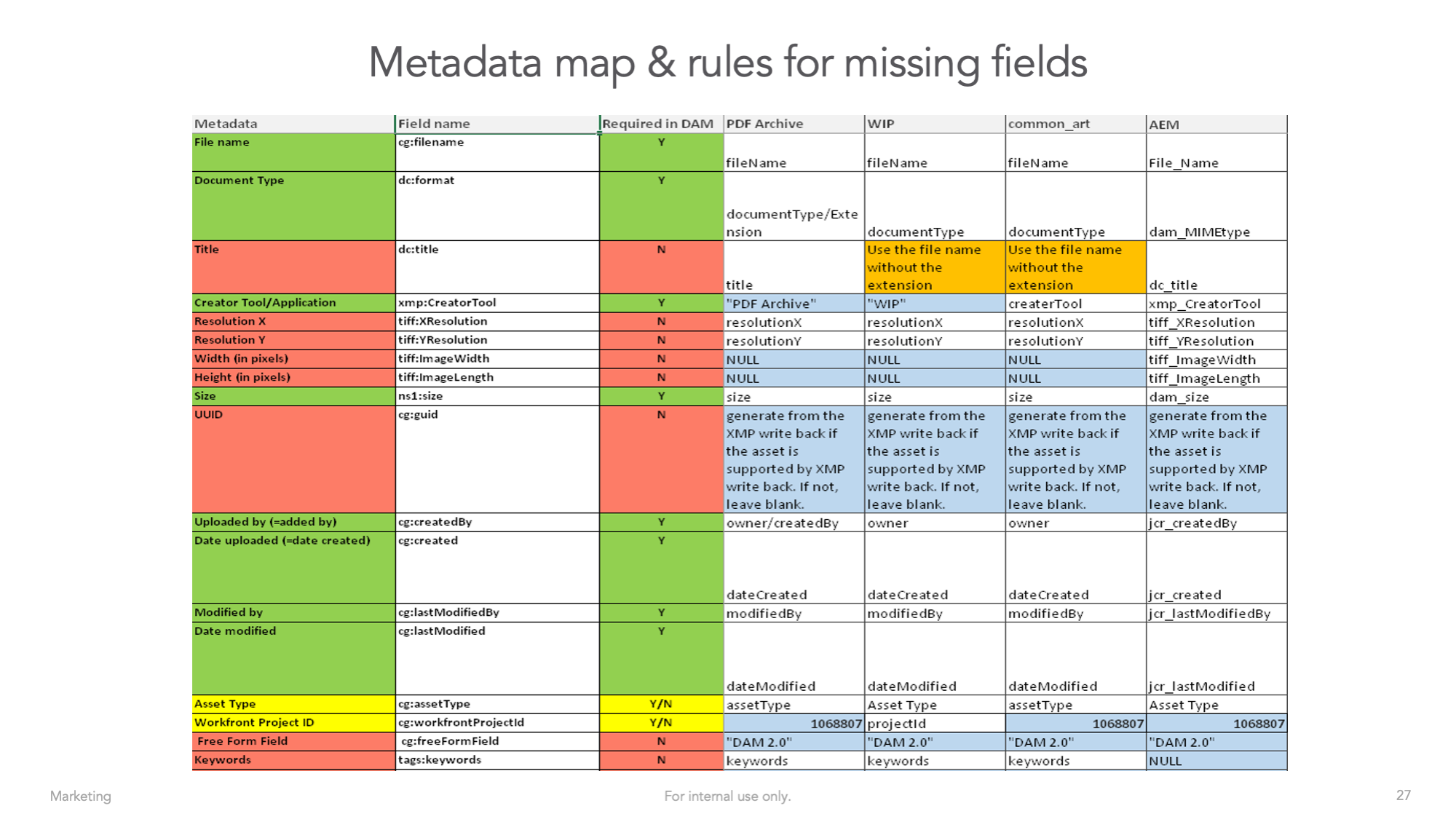
- Defined a content model, metadata structures, and taxonomy for content and digital assets
- Organized a pilot team of content creators to test new structures and optimize creation processes
- Led the strategy for a global, centralized digital asset management system
- Managed the implementation of new content structures for digital publishing
Outcome
Transforming Capital Group’s approach to content was a marathon and not a sprint, given its 90-year history. Armed with a robust long-term strategy, I spearheaded a phased implementation of our vision.
By the end of my tenure, this included new content structures and metadata optimized for digital publishing, structured templates for multi-channel publishing, and streamlined approval processes across all content.
Reflection
Changing how people work is hard; changing someone’s entire mental model of their work is even harder. I vividly remember describing what I considered standard automated multichannel publishing, only to have one of our creators reply, “Sounds like alchemy.”
However, our team’s dedicated user-centered approach ensured that each release directly addressed creators’ actual pain points. That, combined with organizational changes that made the system’s inefficiencies both visible and tangible to creators, increased buy-in and ultimately paved the way for a new way of working.
Obsession with efficiency
Although my company was an early adopter of Adobe Experience Manager, our initial project-based approach to building out the AEM toolkit resulted in a mismatched bundle of components. As our global digital footprint expanded, this complex infrastructure hindered efforts to automate multilingual publishing and implement features like personalization.
To address both these problems and pilot a new product-led model within the organization, I stood up a product team dedicated to the long-term management and evolution of the design system and its digital instantiation.
Approach
- Secured buy-in with design and digital leadership to manage the design system as a product.
- Identified and implemented “quick wins” — tech-agnostic components quickly developed and launched by the team.
- Developed the product vision, established guiding principles, and defined roles and responsibilities and prioritization criteria.
- Enhanced our design governance processes.
- Provided guidance and leadership to a cross-disciplinary team working together in a new way.
Outcome
By the end of my tenure, we had introduced several high-value components, reducing webpage authoring time by 400%. Our refined processes enabled the team to develop new components in just 30% of the previously required time — a pace that positioned them to expand the core toolkit across all global sites within six months.
Reflection
Even at the stakeholder level, everyone involved felt a sense of ownership over this work—a fitting sentiment given the interconnected nature of design patterns and technical components. Initially, meetings were unproductive as team members argued about ownership issues without genuinely listening to each other.
To address this, I reset our approach, taking the team back to square one with workshop exercises designed to foster a sense of shared humanity and build trust. As resentments waned, the team began to align around shared goals and foundational principles. Although the group was never completely harmonious during my tenure, they were able to leverage their common ground to advance the work effectively.
This experience underscored that trust and alignment are critical foundations for effective collaboration, and necessary for driving progress.
Creative leadership
For months, our global brand managers had been working with two external agencies to develop an international brand advertising campaign. Despite throwing millions of dollars at the problem, neither of the agencies had come up with a concept that fulfilled the brief and effectively conveyed the core of our brand.
My manager and I spotted an opportunity to showcase our tremendous in-house talent while also demonstrating the benefits of an experiment-based approach to design. But the clock was ticking: We had three weeks before the stakeholders were reviewing final concepts.
Approach
- Developed an accelerated project schedule with one-week cycles for ideation, feedback, and testing.
- Organized and led initial creative ideation workshops.
- Guided the creative team through the process of refining initial ideas to napkin pitches and then low-fidelity sketches.
- Conducted research to integrate customer insights into our concept refinement.
Outcome
On pitch day, the in-house team went up against the two agencies, sharing the concept that our early experiments showed would resonate with customers. The stakeholders loved it, and they chose to proceed with our in-house team. We then created stills, animations, and videos for the campaign, which launched internationally in September 2022.
Reflection
In a company where such projects typically span six months (if not more), I was initially hesitant to subject my team to the intense crunch this effort would require. However, I recognized a prime opportunity to showcase the power of experimentation and the exceptional talents of my team to high-level global stakeholders. Once I embraced the challenge wholeheartedly, I found that my full commitment, coupled with the chance to engage in highly creative work, inspired the entire team to enthusiastically join the effort.
This experience not only left me in awe of my team’s tremendous capabilities under pressure, but it also reminded me of the transformative impact that strong leadership and creative freedom can have on team engagement and project success.